Capital Gains Tax Calculator
See how much federal capital gains tax you might owe when selling your home — before you close the deal.


How Capital Gains Tax Calculator Works
When you sell a property for more than you paid for it, the profit is called a capital gain — and the IRS may want a cut. This estimator walks you through the key numbers: what you sold for, what you paid, what you've put into it, and your filing status. In seconds, you'll see an estimate of your potential federal tax bill.
The calculator uses the standard long-term capital gains framework. First, it figures your total gain (sale price minus purchase price and costs). Then, if you've lived in the home as your primary residence for at least 2 years, you may qualify for a significant tax exemption — up to $250,000 for single filers or $500,000 for married couples filing jointly. That exemption is applied before any tax is calculated.
Whatever's left after the exemption is your taxable gain. The calculator then applies the standard 15% long-term federal capital gains rate to estimate your tax bill. Keep in mind that the actual rate can range from 0% to 20% depending on your total annual income, and high earners may also owe an additional 3.8% Net Investment Income Tax (NIIT).
If you're selling an investment property, vacation home, or a home you haven't lived in for 2+ years, you don't qualify for the primary residence exemption — so your full gain becomes taxable. This is a great scenario to run through the calculator to see just how significant that difference can be.
This tool gives you a quick ballpark to help with planning, but it doesn't factor in state taxes, depreciation recapture, or individual income-based rate adjustments. For a high-stakes transaction like a home sale, it's worth following up with a tax professional to get your full picture.
Capital Gains Tax Calculator Formula Breakdown
Formula
Total Capital Gain = Sale Price − (Purchase Price + Improvements & Costs)
Tax Exemption Amount = $0 (investment/lived in < 2 years) OR $250,000 (Single, primary residence 2+ years) OR $500,000 (Married, primary residence 2+ years)
Taxable Gain = Total Capital Gain − Tax Exemption Amount (minimum $0 — cannot go negative)
Estimated Federal Tax Bill = Taxable Gain × 15%
Variables Explained
- Sale PriceThe total amount you're selling the property for. This is typically the agreed-upon contract price, found on your closing disclosure or settlement statement. Use the gross sale price before subtracting any selling commissions or closing costs.
- Purchase PriceWhat you originally paid for the property, including the down payment and any debt taken on. You can find this on your original closing disclosure or HUD-1 settlement statement from when you bought the home. If you inherited the property or received it as a gift, your basis may be different — consult a tax advisor.
- Improvements & CostsThe combined total of two things: (1) capital improvements you made to the property over time — things like renovations, room additions, new roofing, or HVAC systems that added lasting value — and (2) selling costs like agent commissions, title fees, and closing costs you paid at sale. Both of these reduce your taxable gain. Routine repairs and maintenance do not count. Keep receipts and contractor invoices to document improvement costs.
- Filing StatusYour tax filing status determines whether you qualify for the primary residence capital gains exemption and how much of your gain is sheltered from tax. 'Investment / Lived in < 2 Years' means no exemption applies. 'Single (Primary Residence 2+ Years)' provides a $250,000 exemption on your gain. 'Married (Primary Residence 2+ Years)' provides the largest exemption of $500,000. To qualify, you generally must have owned and lived in the home as your main residence for at least 2 of the past 5 years before the sale.
Example Calculation
Given:
- Sale Price: $600,000
- Purchase Price: $200,000
- Improvements & Costs: $50,000
- Filing Status: Married (Primary Residence 2+ Years)
Calculation:
Total Capital Gain = $600,000 − ($200,000 + $50,000) = $350,000
Tax Exemption Amount = $500,000 (Married, primary residence 2+ years)
Taxable Gain = $350,000 − $500,000 = -$150,000 → capped at $0
Estimated Federal Tax Bill = $0 × 15% = $0.00
Result:
$0.00 estimated federal tax billExplanation
A married couple bought their home for $200,000, spent $50,000 on renovations and selling costs, and sold it for $600,000 — a solid $350,000 total gain. Because they've lived in the home as their primary residence for over 2 years, they qualify for the $500,000 married filing jointly exemption. Since their gain ($350,000) is well below that exemption ceiling, they owe zero federal capital gains tax on the sale. This is exactly the scenario the home sale exclusion was designed for.
Steps
- Step 1 — Calculate your total gain: Subtract your purchase price and all improvements & costs from your sale price. This is your raw profit before any exemptions.
- Step 2 — Apply the tax exemption: Based on your filing status, subtract your eligible exemption ($0, $250,000, or $500,000) from your total gain. If the result is negative, your taxable gain is $0 — you owe no federal capital gains tax.
- Step 3 — Estimate your federal tax bill: Multiply your taxable gain by 15% to get the estimated federal capital gains tax owed. Note that your actual rate may be 0%, 15%, or 20% based on your total taxable income for the year.
Tips for Using Capital Gains Tax Calculator
- 💡Don't overlook the 'Improvements & Costs' field — many sellers underestimate their deductible costs. Agent commissions alone often run 5–6% of the sale price, and adding documented renovation costs can meaningfully reduce your taxable gain. Keep receipts for any capital improvements you've made over the years.
- 💡Your actual federal rate may be 0%, 15%, or 20% depending on your total income for the year. For 2026, single filers with taxable income up to $49,450 owe 0% on long-term gains. The 15% rate applies up to $545,500 for singles and $613,700 for married couples filing jointly. The 20% rate kicks in above those thresholds.
- 💡This calculator estimates federal tax only. Most states also tax capital gains — often at your regular income tax rate — and that bill can be significant. Additionally, if your income exceeds $200,000 (single) or $250,000 (married), you may owe an extra 3.8% Net Investment Income Tax on top of the standard rate. A tax professional can give you the full picture before you close.
See How Businesses Use Calculators Like This
Real Estate Calculators
Your visitors leave to find mortgage calculators on Zillow and Bankrate — and get retargeted by your competitors. Embed mortgage, rental yield, and ROI calculators on your own site so leads never have a reason to leave.
Financial Calculators
Your clients are getting loan and retirement advice from Bankrate — not you. Stop emailing Excel files and linking to competitor sites. Embed professional loan, compound interest, and tax calculators on your own brand.
Make Your Own Web Calculator in 3 Simple Steps
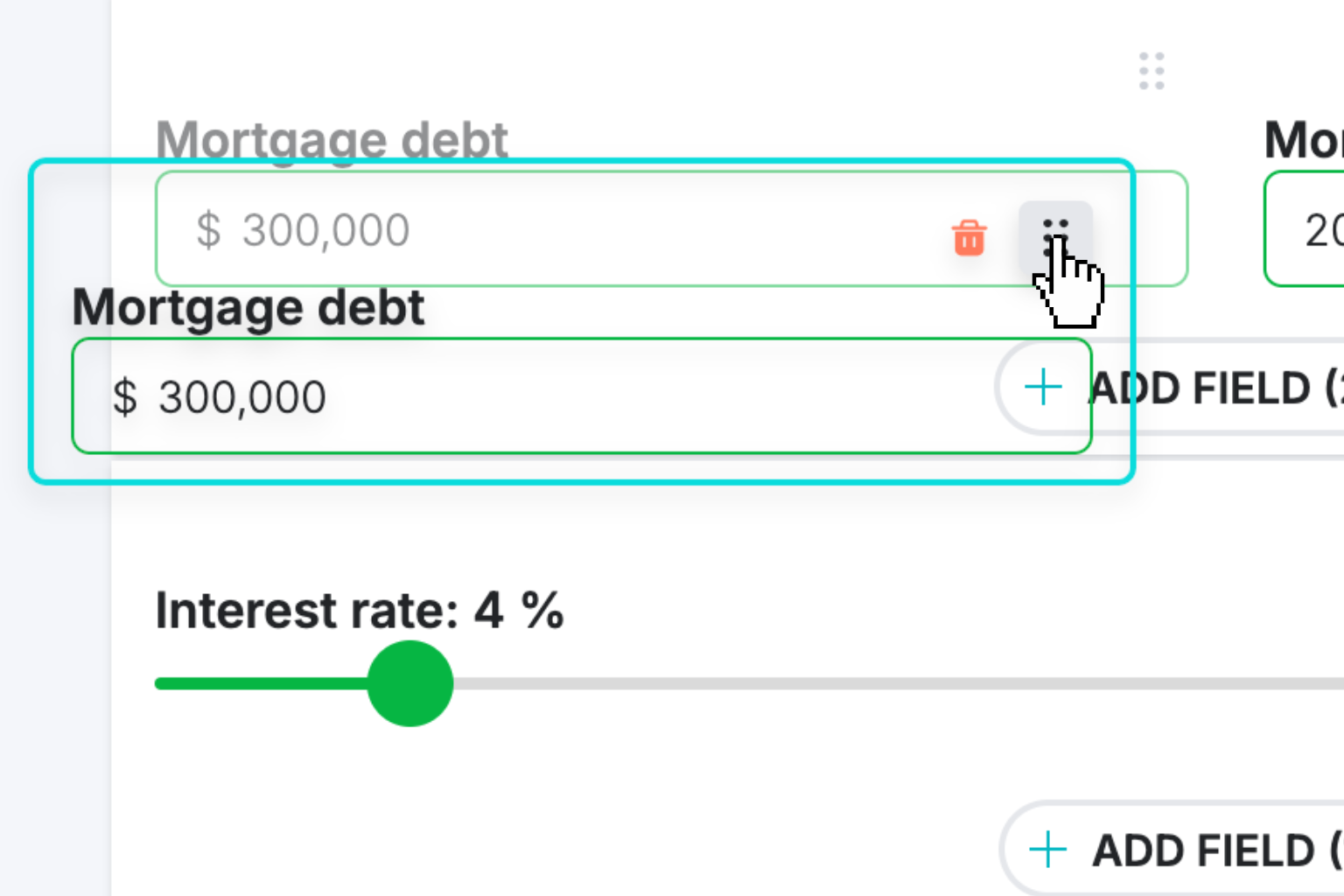
Create Interactive Calculator
Design your interactive calculator in under 5 minutes using our drag-and-drop builder.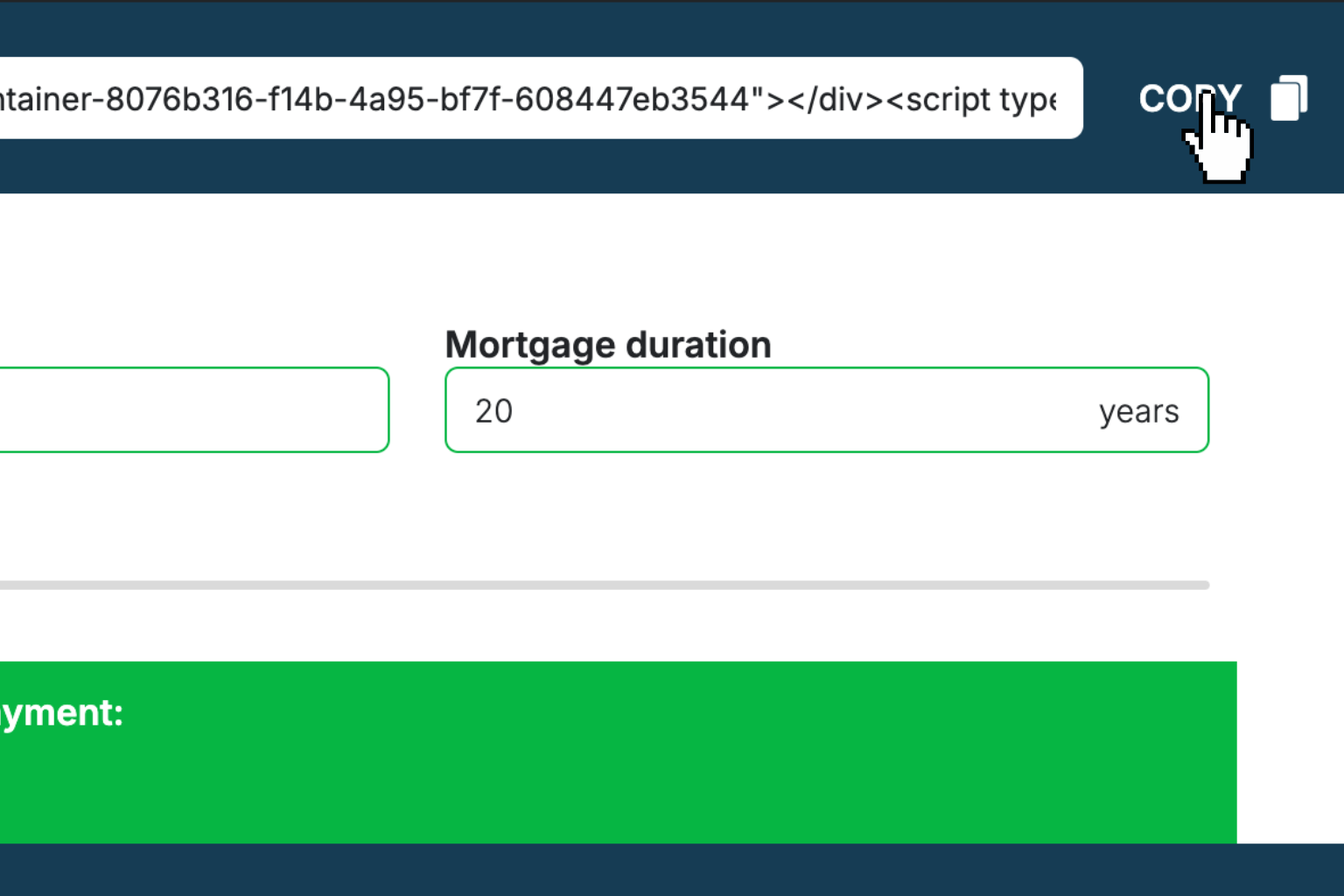
Preview & Generate Embed Code
Review your calculator and copy the embed script when you're satisfied with the results.
Embed Calculator Into Your Website
Paste the code into your website's HTML. Works on WordPress, Shopify, Wix, and any platform.Works With Any Platform
 EugenCreator of Creative Widgets
“After 10+ years in digital marketing, I’ve built calculators that drove thousands of new leads for clients. I realized one thing: calculators convert. They're killer for CRO and great for SEO. That's why I built Creative Widgets—an easy, no-code calculator builder. ”
It's free. Try it out. You'll like it.